
I used to treat a seed phrase as sacred, the single source of truth. It felt simple: write twelve or twenty-four words and hide them somewhere safe. Wow! Yet over time, watching friends lose funds because a piece of paper burned, or a kid accidentally tossed it with moving boxes, I started to see just how fragile that simplicity really is. My instinct said that there must be a better, more durable way.
Initially I thought hardware wallets were the obvious answer for everyone. They keep keys offline, they use chips that resist tampering, and they look like small vaults. Here’s the thing. But then I watched my sister lug a bulky device across airports, fumble with cables and passwords, and finally decide to copy the seed phrase onto a sticky note out of sheer frustration, which felt like a little betrayal of the whole point. So convenience and durable security often don’t coexist in practice, sadly.
That tension—between safety and usability—led me down a few rabbit holes. I tested methods: laminated paper, steel plates, multisig setups on testnets, even redundant cloud lockers. Seriously? On one hand, multisig and metal backups are technically superior, and they reduce single points of failure, though on the other hand they add complexity that trips up average users and increases the chance of mistakes when moving between services. I kept circling back to a simple question: can a user-friendly object replace brittle paper?
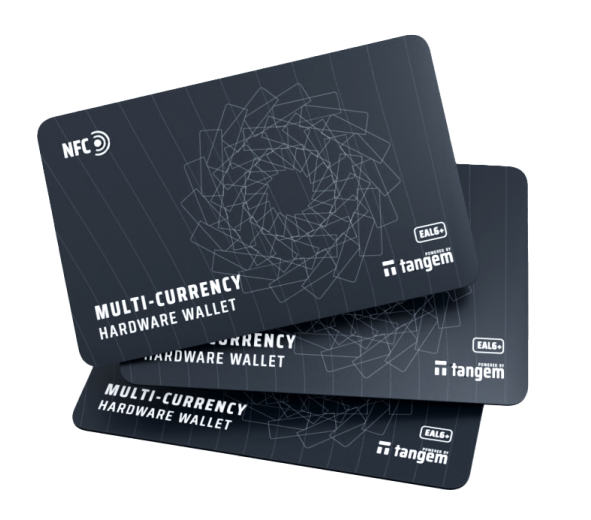
Then I discovered backup cards and smart-card solutions that pair cryptographic keys with physical hardware. At first glance they look like credit cards with a tech twist: resilient, sleek, and easy to carry. Wow! These cards use secure elements and can store private keys in a way that prevents direct extraction, which means the key never leaves the card and attackers can’t just copy a phrase from a sticky note and drain your funds. My first reaction was relief, but curiosity kept me testing for real-world failure modes.
I tried them in pockets, in wallets, and under the couch cushions—whoa, they survived more than I expected. I froze one, I bent one, I left another in the sun at a backyard barbecue to see what would happen. Really? What surprised me was not only the physical durability but the UX shift: instead of memorizing or copying awkward words you tap or scan a card, confirm a signature on-device, and the cryptography happens quietly without exposing a human-readable secret that could be photographed. Something still felt off: backup logistics and recovery pathways still mattered a great deal, somethin’ like that.
Then there’s supply-chain and vendor trust to seriously consider. Who made the card, can the firmware be audited, are keys generated on-device or injected at the factory? Here’s the thing. Initially I trusted marketing materials and glowing reviews, but then I dug into firmware repositories and supplier certifications, and actually wait—some key generation methods were ambiguous, which forced me to rethink trust models and what ‘non-extractable’ really means in practice. They reduce leakage but add opaque new layers sometimes.
I also explored how these cards integrate with wallets and smart contracts. Integration varied: some vendors used standard protocols, others relied on custom SDKs that lock you in. Wow! This matters because if your recovery card only talks to one app, then future software migrations or community tools won’t be able to reconstruct or use your keys, and you might be stuck if that company shutters operations or pivots their roadmap. That’s a real operational risk for people who want longevity in their vaults.
Smart cards, backup cards, and real-world trust
Smart cards often offer an appealing middle ground for many everyday crypto users. They avoid exposing a human-readable seed, yet allow portable recovery and physical ownership. Really? If you want a card that has strong firmware provenance, an active developer community, and a track record of audits, then look for vendors who publish reproducible builds and cryptographic proofs, because not all cards are created equal and your life savings shouldn’t depend on marketing alone. For a practical, well-known example that balances security and usability, check the tangem hardware wallet.
Pairing cards with multisig vaults is actually my favorite pattern for resilience. You can split control across devices, store one card in a safe deposit box, another at home, and keep one in your pocket. Here’s the thing. That setup mitigates single points of failure and social-engineering risks because an attacker has to compromise multiple physical tokens and different locations, though it does raise the bar for your own access when you travel or need quick liquidation. Practice the recovery process at least once, ideally with small amounts first.
I’ll be honest: I’m biased toward physical backup strategies I can touch and test. But I’m also aware that no single approach is perfect, and that trade-offs are real. Wow! Initially I thought an all-digital future would render physical backups obsolete, but after seeing failure modes across decades of user mistakes and device rot, I now believe hybrid approaches that combine smart cards, audited firmware, and clear recovery playbooks are the most pragmatic path forward for most people. So if you want a seed-phrase alternative that’s durable, usable, and auditable, consider cards plus redundancy.
Common questions
Can backup cards replace seed phrases entirely?
Yes, for many users backup cards can replace paper seeds if they’re implemented correctly. They must generate keys on-device, be auditable, and support straightforward recovery flows. Here’s the thing.
What are the biggest risks with card-based backups?
If a card’s ecosystem is closed or if the vendor disappears, you might find yourself unable to recover unless you’ve planned redundancy across cards or multisig partners, so don’t treat a single card as a one-stop permanent vault. Test with small amounts, read documentation, and keep a recovery plan.